
Posted October 15, 2026
Does a quantum chip care where it is located?
The story of a superconducting quantum chip that successfully traveled from Gothenburg to Singapore and back

Marina Bay, Singapore. [Photo by: Stefan Hill]
Stefan Hill, Junjie Li
When you travel from the temperate climate of Gothenburg to the humid tropics of Singapore, you’ll likely notice the difference. You simply wear a T-shirt, maybe put on some sunscreen, and your body craves a coconut ice cream. But what happens to a quantum processor manufactured in temperate Gothenburg when it’s shipped to humid, tropical Singapore?
Even though most quantum devices are housed in carefully controlled labs, the journey and the new location could still affect how they behave: the shipping process itself, a different lab setup, or even a different magnetic environment. If we want a global market for quantum components, they must work reliably wherever they are sent, just like consumer electronics such as your iPhone.
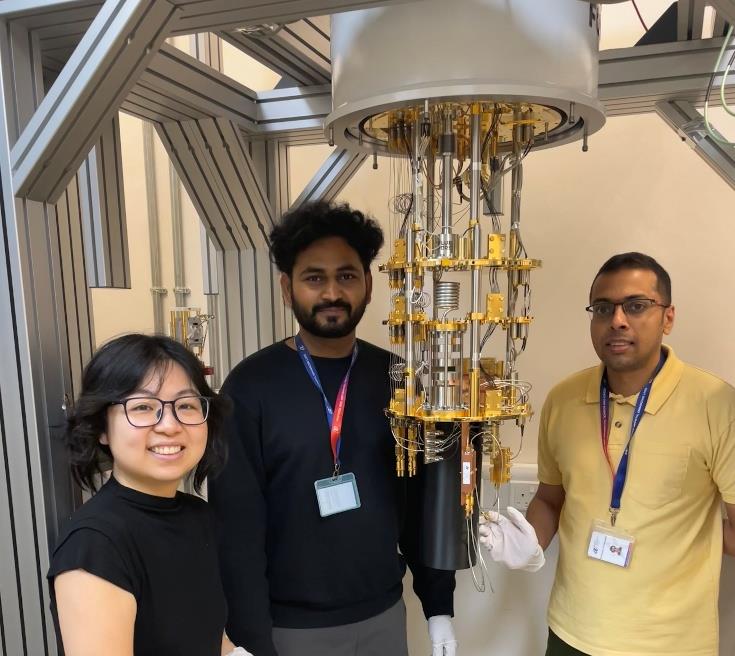
This is the topic that engineers from the Gothenburg-based companies Chalmers Next Labs AB, ConScience AB, and the National Quantum Federated Foundry Singapore (NQFF) have been investigating over the past year as part of a project funded by the Swedish innovation agency Vinnova. The subject of the experiment is a QiB1 quantum processor from ConScience AB.
A Fragile Chip on a Long Journey
Without going into the details of how a superconducting quantum processor works: Researchers devised a method for using very thin layers of aluminum oxide to fabricate a key component of quantum bits, also known as qubits. A qubit is the smallest unit of computation in a quantum processor. It is controlled by a microwave pulse of a specific frequency. If the aluminum oxide is even slightly thicker or thinner than intended, it can significantly affect the frequency to which the qubit responds.
Now imagine this fragile processor traveling from Gothenburg to Singapore. The two locations are even in different magnetic environments, to which thin superconducting materials can be sensitive. Will it still behave the same after a trip halfway around the world?
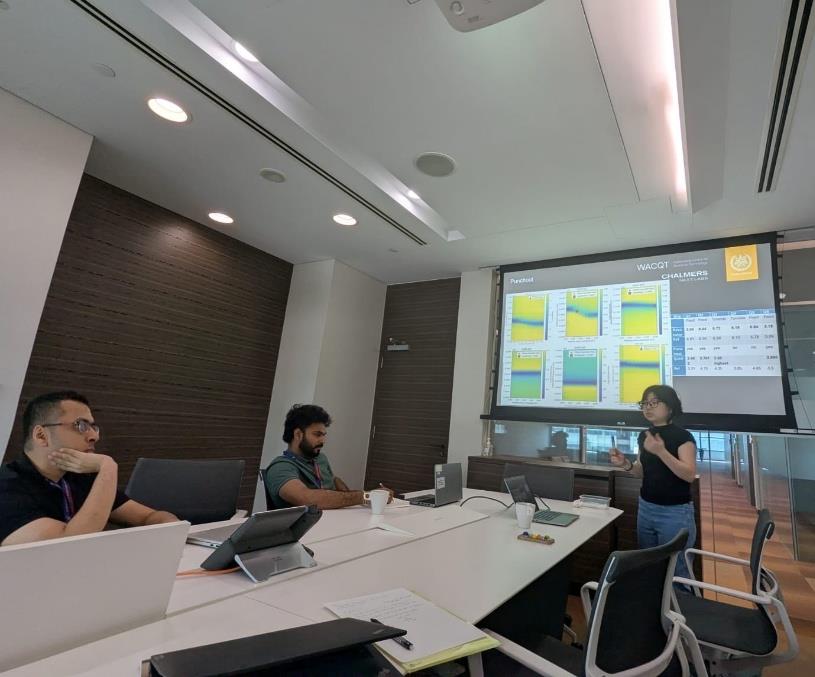
First, engineers from ConScience AB and Chalmers Next Labs AB calibrated the quantum chip at the WACQT Quantum Technology Testbed in Gothenburg in January 2026. This provided them with the initial control frequencies. A few months later, engineers from NQFF in Singapore repeated the exact same procedure. It turned out that the difference in frequency was only about one percent in measurements taken at both sites. And when the processor was shipped back to Gothenburg and calibrated again in August, the frequencies were still within the one percent margin compared to the measurements taken in January.
Another important quality factor is the coherence time, known asT1. This time roughly indicates how long a qubit retains its information before it fades away. The longer it is, the more complex the calculations you can perform. The best qubit on the chip achieved a coherence time of more than 100 microseconds, which is within the range reported by leading laboratories for this type of qubit.
Singapore-Sweden – A Collaboration with Potential
You might wonder why this project was carried out in Singapore and not somewhere else near the equator. The reason is that Singapore, like Sweden, has been an early investor in quantum technology, and both countries have a well-developed ecosystem of research institutions and companies.
Furthermore, in October 2025, representatives from both nations signed a memorandum of understanding (MOU) to strengthen strategic collaboration in quantum technologies between Singapore’s National Quantum Office (NQO), the Quantum Sweden Innovation Platform (QSIP), and ten leading Swedish research institutions. This framework, built on shared ambitions to advance international collaboration in quantum technologies, talent development, and industry partnerships, has made several concrete, hands-on collaborations possible, such as this one.
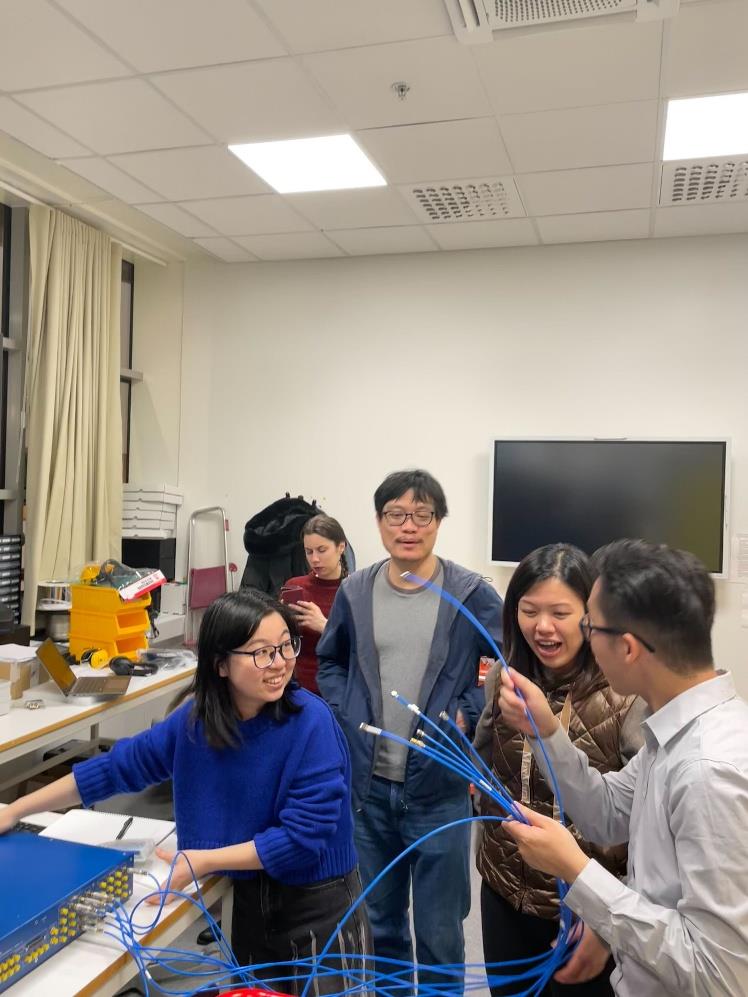
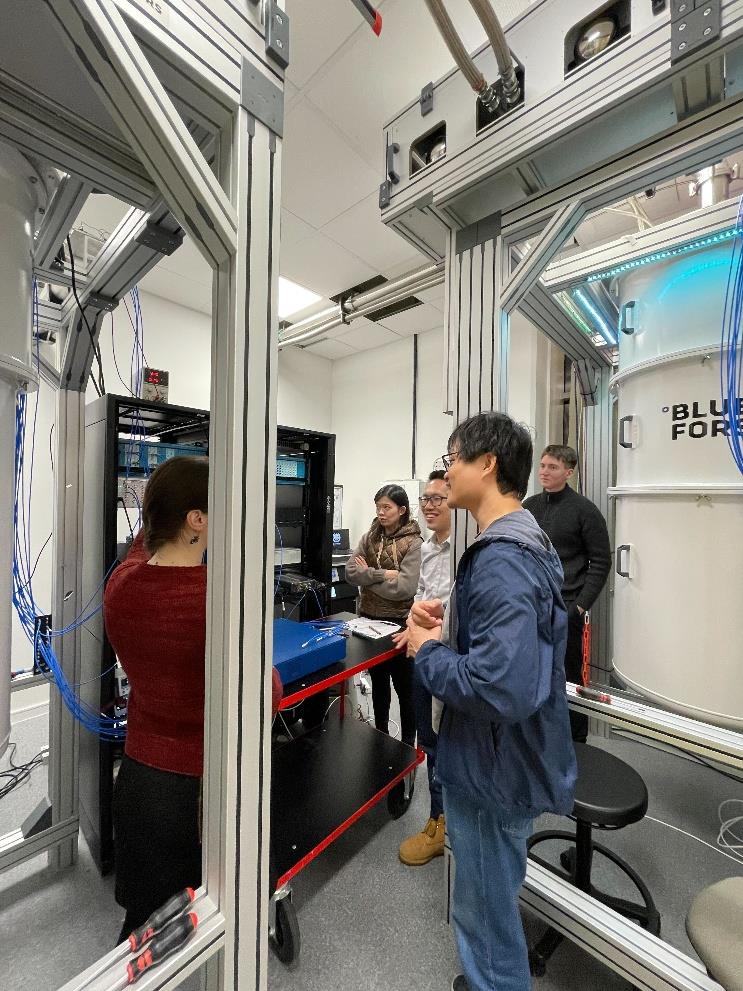
In addition to exchanging scientific methods and knowledge, we made sure to learn about each other’s cultures and cuisines. When our colleagues from Singapore visited Sweden, we introduced them to Swedish herring—surströmming! Likewise, we got to taste durian when we visited Singapore. Since everyone survived, we considered it a successful stress test of international collaboration.

What's Next
The next project ideas are already in the planning stages. The now-established WACQT-NQFF Twin Testbed provides a platform to drive and support more cross-validation projects involving quantum technologies in Sweden and Singapore.
Does your company manufacture components for the quantum stack? Are you curious about how your devices perform in different environments? We will begin offering a service to help you carry out your measurement projects in the Gothenburg–Singapore Twin Testbed. Contact us at hello@chalmersnextlabs.se and we’ll be happy to assist you further.
For details on the measurements, a joint project report will be presented at the APS March Meeting in 2027.
The project “Quantum Advancement through Sweden–Singapore Integration (QUASI)” is funded by Vinnova.